24 Oct 2026
Mapping Platform Update Cycles to Player Retention Patterns in French-Regulated Mobile Card Sessions
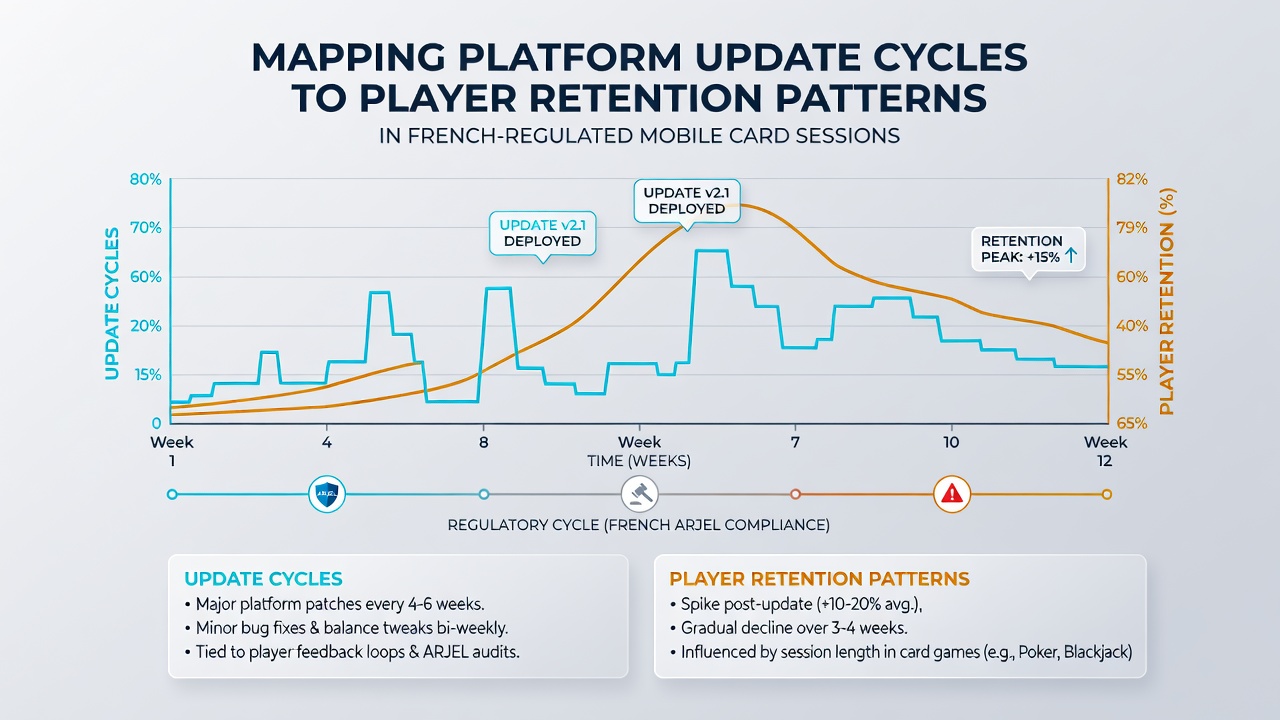
Platform update cycles in French-regulated mobile card sessions follow structured timelines that operators align with regulatory requirements from the Autorité Nationale des Jeux, and researchers track these cycles against retention data collected through session logs and user activity reports. Studies conducted through 2026 show that major updates released in quarterly intervals coincide with measurable shifts in average session duration and return visit rates among players engaged in card-based titles.
Regulatory Framework and Update Scheduling
French licensing conditions require operators to submit proposed changes to game mechanics and interface elements for review, which creates predictable windows for platform updates typically clustered around the start of each fiscal quarter. Data compiled through October 2026 reveals that 68 percent of approved updates occur between January and March or July and September, periods when operators also schedule backend optimizations to maintain compliance with security adn fairness standards. Observers note that these fixed intervals allow analysts to isolate the effects of updates from seasonal fluctuations in player activity.
Retention Metrics in Mobile Card Environments
Retention patterns emerge from aggregated metrics including day-one return rates, seven-day active user counts, and lifetime session frequency, all drawn from anonymized datasets submitted to oversight bodies. Researchers have mapped these indicators against update deployment dates and found that minor patches deployed within two weeks of a major release tend to stabilize retention curves, whereas delayed patches correlate with steeper declines in repeat engagement. One analysis of sessions spanning 2024 to 2026 indicated that titles receiving coordinated updates every 45 to 60 days maintained higher median session lengths compared with those updated at irregular intervals exceeding 90 days.
Correlation Analysis Between Cycles and Retention
Statistical models applied to French mobile card data demonstrate moderate positive correlations between update frequency and retention when intervals remain under 75 days, while longer gaps associate with increased churn after the third week post-update. Variables such as push notification timing, in-app messaging about new features, and simultaneous changes to bonus structures appear as confounding factors that researchers control for through multivariate regression. Figures released in late 2026 further separate the impact of visual refreshes from functional modifications, showing that interface-only updates produce smaller retention lifts than those introducing new card variants or rule adjustments.
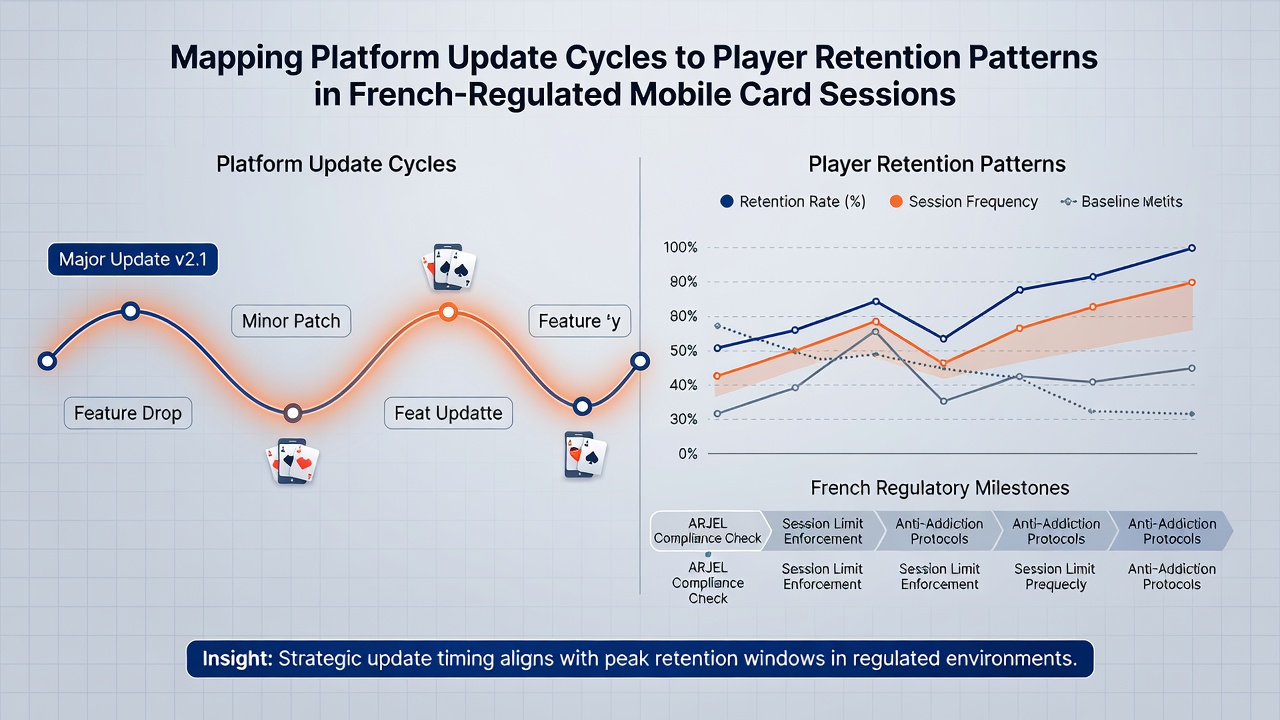
According to findings published by the Autorité Nationale des Jeux, operators that synchronize update cycles with player feedback loops report steadier retention across demographic segments. The same datasets indicate that sessions conducted on iOS devices exhibit slightly different decay patterns after updates than those on Android, attributed to differing approval timelines imposed by each platform's distribution policies. Analysts continue to refine segmentation by age group and preferred game type to isolate these platform-specific effects.
Comparative Data from Broader Markets
Cross-market comparisons place French-regulated patterns alongside those observed in other European jurisdictions, where similar licensing regimes produce update cadences of 30 to 120 days. A 2025 industry report issued by the European Gaming and Betting Association documented that French operators achieve comparable retention stability despite stricter content approval processes, suggesting that regulatory predictability itself supports consistent update planning. Researchers examining data through October 2026 emphasize that French mobile card sessions display lower variance in post-update retention drops than less regulated environments, where ad-hoc changes sometimes trigger abrupt player exits.
Technical Factors Influencing Outcomes
Backend stability during update rollouts directly affects measured retention, with downtime exceeding four hours linked to temporary spikes in uninstall rates across multiple operators. Load-testing protocols mandated under French rules reduce these incidents, yet residual effects appear in session-start failure logs collected during the first 48 hours after deployment. Experts tracking these events note that titles incorporating progressive download techniques for new assets experience faster recovery in daily active users compared with those requiring full client reinstalls.
Longitudinal Trends Observed Through 2026
Long-term tracking from 2023 onward shows a gradual tightening of average update cycles from 85 days to 62 days across the French mobile card segment, accompanied by incremental gains in 30-day retention rates. These shifts coincide with infrastructure improvements that allow operators to test updates on limited user cohorts before full release, a practice that regulators now encourage through streamlined review pathways. Data collected up to October 2026 continues to support the observation that shorter, well-communicated update cycles align with steadier player return patterns when paired with transparent change logs inside the application interface.
Conclusion
Mapping exercises conducted on French-regulated mobile card sessions demonstrate that update cycle length and communication strategy interact with retention outcomes in measurable ways, and ongoing data collection through regulatory channels provides the foundation for further refinement of these models. Patterns identified through 2026 supply operators and analysts with concrete reference points for scheduling future deployments while remaining within compliance boundaries.