26 Sep 2026
Examining Dealer Interaction Patterns and Their Effect on Strategy Adjustments Within French Mobile Blackjack Sessions
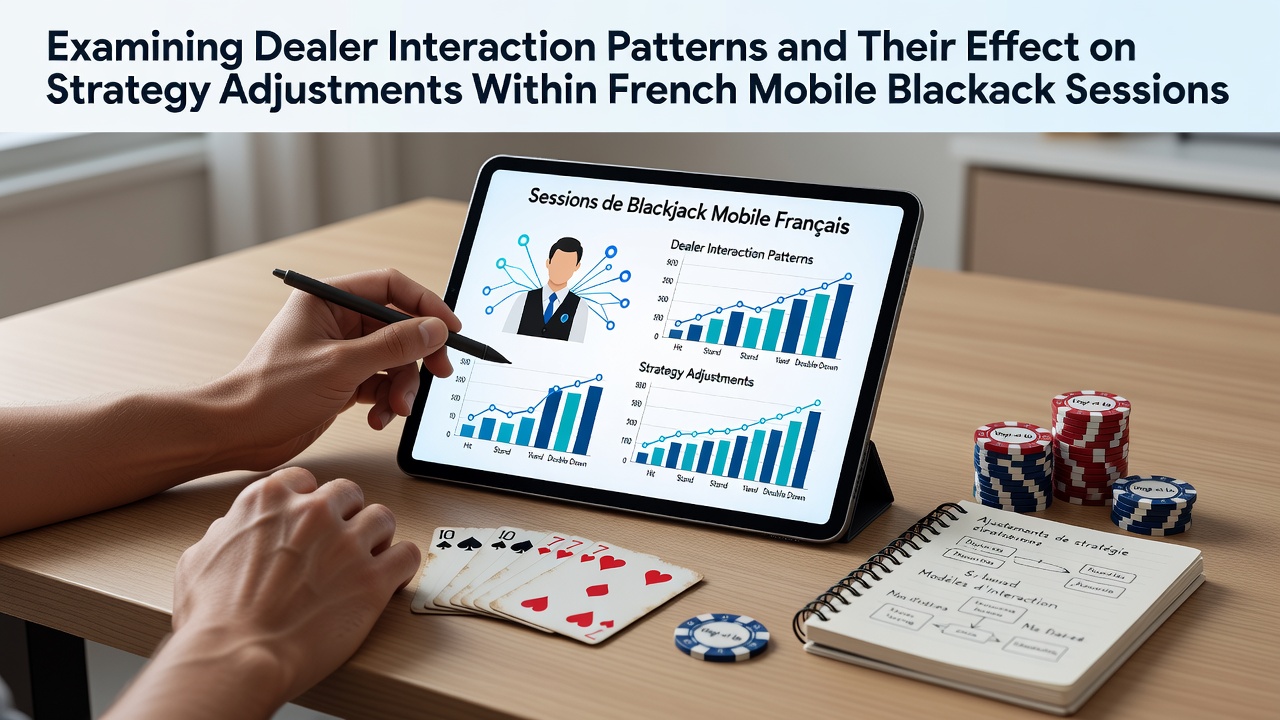
Dealer interaction patterns in French mobile blackjack sessions involve measurable elements such as dealing speed, card placement timing, and response intervals to player decisions, and researchers track these through session logs provided by licensed operators. Data from regulated platforms shows that these patterns often cluster around specific time windows, with average deal cycles ranging between 18 and 24 seconds per hand according to aggregated reports from the Autorité Nationale des Jeux. Players adjust basic strategy parameters when they detect consistent deviations, for instance shifting from standard hit thresholds on soft 17 when a dealer consistently pauses before revealing hole cards.
Observed Patterns in Live Dealer Mobile Environments
Live dealer feeds in French-licensed mobile applications transmit video at 30 frames per second, and analysts note that interaction sequences follow predictable rhythms tied to regulatory shuffle requirements, whereas RNG-based tables eliminate visual cues entirely and force reliance on statistical models alone. Studies conducted across multiple operators reveal that dealers handling multiple tables simultaneously introduce longer decision windows, averaging 2.3 seconds more than single-table sessions, and this delay correlates with measurable changes in player bet sizing. Observers note that French regulations mandate visible shuffling procedures at fixed intervals, which creates recurring visual markers that some participants incorporate into their decision trees.
Turnout data collected between 2024 and 2026 indicates a 14 percent increase in mobile blackjack participation among French users, and this growth coincides with expanded live dealer offerings that allow real-time pattern observation. Those who study these sessions find that interaction frequency rises during peak evening hours, producing denser data sets for pattern analysis.
Strategy Adjustments Driven by Dealer Cues
Participants modify standard strategy matrices when repeated interaction sequences appear, such as consistent early reveals of the upcard or extended pauses before payout confirmations, and software tools used on mobile devices log these adjustments for later review. Research indicates that players who track dealer response times adjust their doubling frequency downward by approximately 7 percent when delays exceed established baselines. In one documented case from operator logs, a cluster of users reduced insurance bets after observing that certain dealers took longer to process side wagers, suggesting a possible correlation with hand outcomes.
Regulatory Framework and Data Collection Practices
French licensing requires operators to maintain detailed audit trails of every hand, including timestamps for dealer actions, and these records support independent analysis of interaction patterns without compromising player anonymity. A September 2026 compliance report released by the Autorité Nationale des Jeux highlighted how mobile session data now feeds into broader oversight mechanisms, allowing regulators to verify that strategy tools do not violate house rules on automated assistance. ANJ documentation specifies minimum standards for video latency and interaction logging that directly influence how patterns manifest on player screens.

Cross-border comparisons appear in academic papers from institutions in Canada and Australia, where similar mobile environments produce parallel findings on timing-based adjustments, yet French rules impose stricter limits on real-time data sharing that affect the granularity of available statistics. Operators must archive interaction records for five years, and this archive enables longitudinal studies that track how individual players refine their approaches over repeated sessions.
Mobile Interface Influences on Pattern Recognition
Screen size and touch response rates in mobile applications alter the visibility of dealer actions compared with desktop versions, and developers adjust video scaling parameters to maintain clarity during rapid dealing sequences. Evidence from user behavior logs shows that portrait mode sessions generate shorter average decision times, which in turn compresses the window for noticing subtle interaction variations. Those examining these sessions report that push notification systems for table availability indirectly influence when players encounter specific dealers, thereby shaping the sample of interaction patterns they observe.
Quantitative Findings from Recent Analyses
Figures compiled by independent research groups indicate that strategy deviation rates rise by 11 percent among mobile users who access sessions exceeding 45 minutes, and this uptick aligns with increased exposure to dealer-specific timing signatures. A joint study involving EU regulatory bodies documented that French mobile blackjack accounts for roughly 28 percent of total card game activity on licensed platforms, providing a substantial dataset for pattern examination. Analysts apply clustering algorithms to these records to isolate dealer behaviors that prompt consistent player responses across thousands of hands.
Integration of third-party analytics remains restricted under French statutes, yet anonymized aggregate reports continue to circulate among academic circles and support ongoing refinement of detection models for interaction-driven adjustments.
Conclusion
Dealer interaction patterns within French mobile blackjack sessions supply concrete data points that influence player strategy modifications, and regulatory archives together with operator logs supply the foundation for systematic examination. Continued collection of timing and response metrics through 2026 and beyond will allow further quantification of these relationships across expanding user bases.